


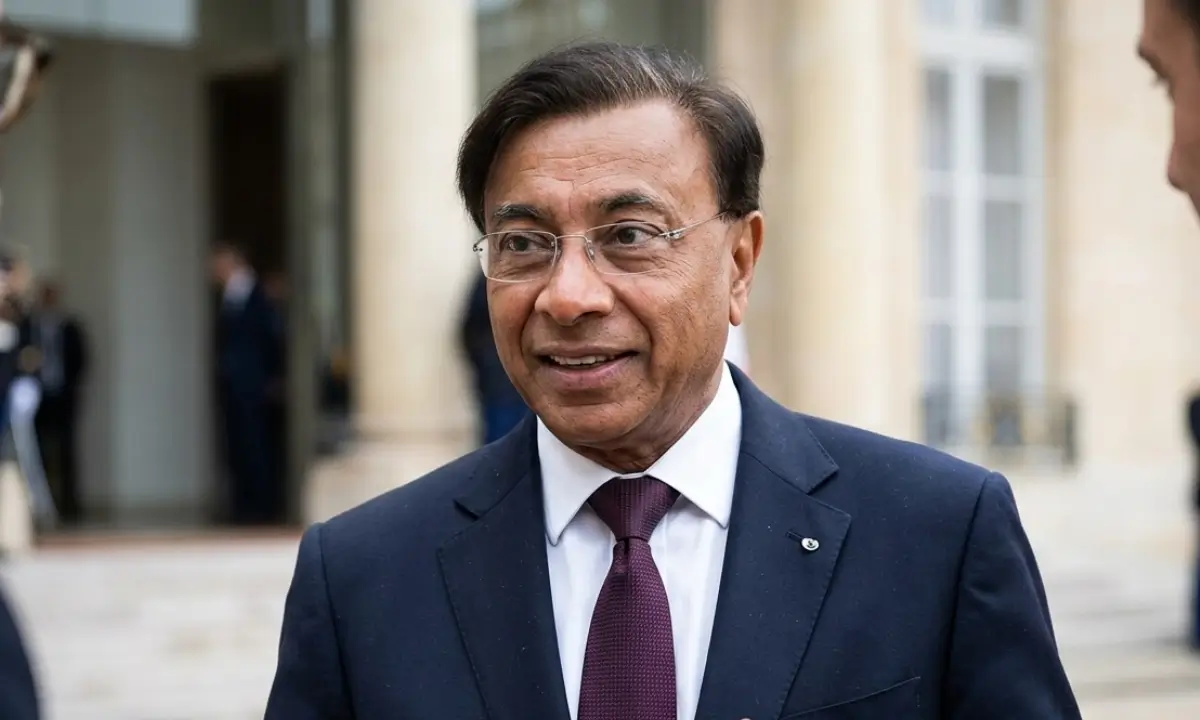
Lakshmi Mittal’s fortune reflects more than a billionaire’s place on a rich list: it is a live measure of the steel industry’s cycles, the value of family-held shares and a new push into global sport. His estimated net worth is around $30.8 billion, but the figure can move as ArcelorMittal’s share price changes, so it should be read as an estimate rather than a fixed balance sheet.
Lakshmi Mittal net worth at a glance
The latest estimates place Mittal among the world’s richest industrialists. Wealth rankings can show different figures because they use different measurement dates, share prices and exchange rates. A real-time estimate, for example, may differ from an annual ranking even when neither represents a sudden change in the person’s actual holdings.
| Estimated asset or value driver | Approximate value | What it represents |
|---|---|---|
| Total estimated net worth | $30.8 billion | An estimated overall fortune; market values can change daily. |
| ArcelorMittal-linked holding | Not separately valued here | The company is the central source of Mittal’s wealth; his family’s reported stake is about 44.6%. |
| Aperam stake | Not separately valued here | A significant family-linked investment in a stainless-steel producer; public estimates vary by date and method. |
| HPCL-Mittal Energy interest | Not separately valued here | A private energy and refining investment whose value is not publicly marked like a listed share. |
| Property and other holdings | Not separately valued here | Includes high-value residences and other private assets, but public estimates are incomplete and not directly comparable. |
This is not a verified personal balance sheet. Public sources do not provide a consistent, current breakdown of every asset, liability, trust interest and private investment. A table that assigns precise dollar values to each category would therefore imply more certainty than the available disclosures support. The most dependable headline figure is the overall estimate, alongside the clear fact that listed steel shares are the principal engine of the fortune.
The phrase Lakshmi Mittal Net Worthh is often used as a search query, but the extra “h” does not signal a separate measure. The essential question is how much of a billionaire’s wealth is tied to one publicly traded company—and what that concentration means when markets turn.
A fortune built on industrial scale
Mittal’s career is a story of building across borders. After starting in his family’s steel business in India, he moved to Indonesia in 1976 and established a steel venture that grew through acquisitions and expansion. The merger with Arcelor created ArcelorMittal, transforming a collection of industrial assets into a global steel and mining group.
Today, ArcelorMittal operates steelmaking facilities in 14 countries and serves customers in about 126 countries. Its 2025 annual report recorded $61.4 billion in sales and approximately 125,554 employees. These figures help explain why the company matters to Mittal’s wealth: his stake is not simply an investment in a ticker symbol, but a claim on a vast operating system of steel plants, mines, logistics and customer relationships.
The net worth of Lakshmi Mittal is therefore sensitive to the fortunes of a capital-intensive, cyclical business. Steel demand rises and falls with construction, infrastructure, automotive production, machinery and industrial investment. Prices for steel, iron ore, energy and freight can move sharply, while trade restrictions and geopolitical disruptions can alter the economics of producing in one region rather than another. A strong year for shares can quickly add billions to a paper fortune; a downturn can reverse part of that gain without the owner selling a single share.
That sensitivity is visible in the gap between rich-list snapshots and real-time estimates. One ranking may record a year-on-year increase using a September valuation date, while a real-time profile shows a lower figure a few weeks later. The change does not necessarily mean a sudden disposal of assets. It can reflect ordinary movement in publicly traded shares and differences in when each list measured the holdings.
What the estimate tells us—and what it does not
A billionaire’s net worth is generally an estimate of assets minus liabilities, not a sum of cash sitting in a bank account. For a founder whose wealth is concentrated in a listed company, the share price does much of the work. It provides a visible market reference, but it does not mean the owner could sell a huge block at that price without affecting the market or changing control dynamics.
Filings and company disclosures put the Mittal family’s ArcelorMittal interest at about 44.6% in early 2026. The company’s annual report describes an arrangement under which the significant shareholder participates proportionally in certain share buybacks, helping maintain the family’s percentage of voting rights while the company repurchases shares. That structure underlines two things: the family remains a major shareholder, and the fortunes attached to the stake are connected to both market value and corporate capital policy.
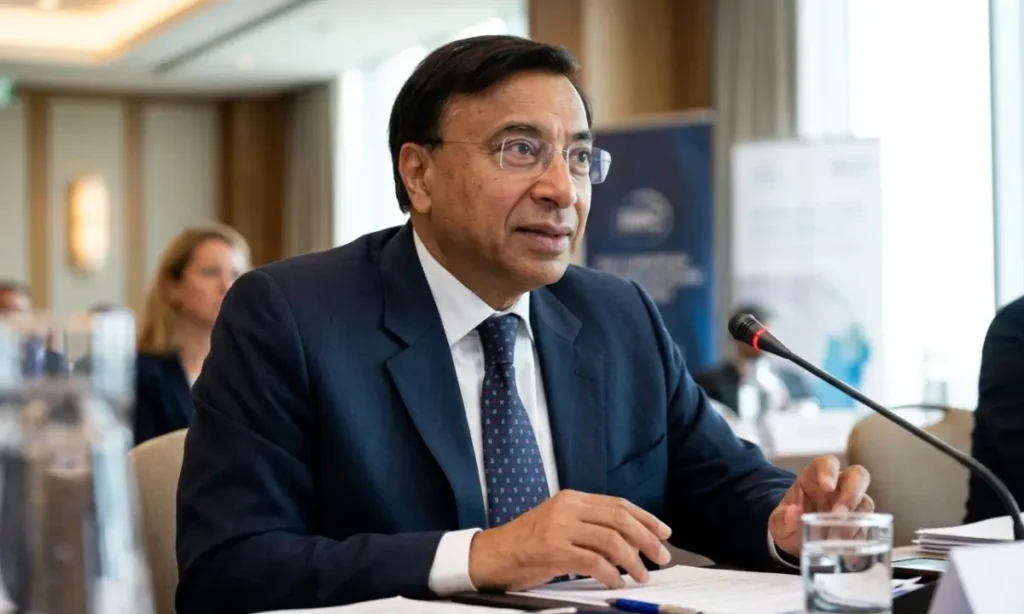
This concentration gives the Lakshmi Mittal Net Worthh figure its defining tension. Ownership of a leading global producer can create enormous upside when earnings expectations and investor sentiment improve. But it also links personal wealth to a business exposed to commodity cycles, industrial demand and the cost of decarbonising steelmaking. Diversification exists in other holdings, but the public record does not support treating those investments as equal in scale or transparency to ArcelorMittal.
The distinction between market value and liquidity matters, too. Shares can be priced every trading day; private businesses, real estate, trusts and family arrangements are harder to value. Headlines may attach large figures to individual properties or private interests, but those numbers can be based on estimates, past transactions or reported valuations rather than recent open-market sales. For readers assessing the net worth of Lakshmi Mittal, the useful measure is not an exact inventory of luxury possessions. It is the underlying structure: a dominant listed-company exposure, complemented by other investments and private assets.
The business outlook behind the fortune
ArcelorMittal’s second quarter of 2026 offers a useful window into the near-term business. The company reported EBITDA of $2.1 billion, a margin of $155 per tonne, and net income of about $700 million. Sales rose to $16.8 billion from $15.5 billion in the first quarter, supported by higher average steel prices and increased shipments.
Those results point to improving momentum, but not immunity from risk. Sustained weak steel or iron-ore prices, oversupply and volatile input costs could weigh on earnings and cash flow. This is why Lakshmi Mittal Net Worth should not be interpreted as a smooth upward line: the value can expand in a rally and contract when investors expect weaker margins or lower demand.
Longer-term, the company is positioning itself for markets where steel demand may be supported by infrastructure, energy systems, electric mobility and data-centre construction. It is also investing in electric-arc furnaces and lower-carbon production. ArcelorMittal has said it expects 3.4 million tonnes of additional EAF capacity to be operating by the end of 2026, while its annual report sets out a multiyear capital-spending programme and a net-zero ambition for 2050.
These investments are strategic but difficult. A lower-carbon production route requires capital, reliable electricity, suitable scrap or direct-reduced iron, and customers willing to pay for lower-emission steel. Projects can be delayed or reworked when economics, policy support or energy costs change. If the transition succeeds, it could help protect the competitiveness of steel assets as buyers and regulators place more weight on emissions. If it proves more expensive or slower than expected, it may pressure returns and the company’s ability to distribute cash.
Cricket, family and the next chapter
The most visible move beyond steel is the Mittal family’s agreement, alongside Adar Poonawalla, to acquire a controlling stake in Rajasthan Royals and associated franchises. The transaction values the group at about $1.65 billion; the Mittal family is expected to hold roughly 75%, with Poonawalla around 18% and existing investors retaining the balance. India’s Competition Commission approved the acquisition in September 2026, although other applicable approvals and closing conditions remain relevant.
The cricket investment gives the family exposure to a different kind of asset: a sports franchise whose value can be shaped by media rights, sponsorship, ticketing, global audiences and the expanding reach of franchise leagues. It also carries its own risks. A team’s valuation is not the same as steady operating profit, and the cost of acquiring a stake does not automatically translate into an immediate addition of equal value to personal net worth. The deal is notable less as a dramatic wealth multiplier than as a diversification of the family’s public identity and business interests.
Leadership succession is another part of the story. Lakshmi Mittal is ArcelorMittal’s executive chairman, while his son Aditya Mittal has been chief executive since 2021. That division places the next generation closer to day-to-day management while the founder remains involved at board level. Usha Mittal is also part of the family’s public story, particularly through philanthropy; she and Lakshmi Mittal have supported education and child-health initiatives.
The related keyword Chaith Mittal does not appear in reliable public material as a clearly identified central figure in Lakshmi Mittal’s immediate family or business succession. It should not be presented as a relative or heir without stronger confirmation. By contrast, Usha Mittal is publicly identified as Lakshmi Mittal’s wife, and their children Aditya and Vanisha are the family members most commonly associated with the public business narrative.
Recent reports also describe Mittal’s move away from the United Kingdom, with Switzerland and Dubai cited as places where he plans to spend time. The decision has been linked in media reports to changes in the UK tax environment, particularly inheritance-tax concerns. Residence does not itself establish a change in the ownership of his companies or reveal how his assets are structured; the significance is that wealth planning and where a family lives can become part of the management of a multigenerational fortune.
Why the net worth story matters
The Lakshmi Mittal Net Worthh headline matters because it joins three larger questions: how industrial fortunes track public markets, how global steelmakers will finance cleaner production, and how a founder’s family broadens its role beyond the original business. His estimated $30.8 billion fortune is a snapshot, not a cash balance or a guarantee of future growth. The company’s operating performance, steel-market conditions and share valuation remain central to its movement.
For investors and industry watchers, the most useful signals are not the ranking alone. They are ArcelorMittal’s profit margins, its ability to generate cash through cycles, the returns on its growth and decarbonisation spending, and the degree to which the family maintains its strategic influence. The Rajasthan Royals transaction adds a new strand to that story, but steel remains the foundation.
Ultimately, the net worth of Lakshmi Mittal is best understood as a measure of ownership and industrial exposure rather than a simple tally of personal spending power. It captures the scale of a business empire built over decades—and the uncertainty of what that empire will be worth as markets, technology and family priorities evolve.

2 Comments
Pingback: Paul McCartney Net Worth: Fortune Behind the Music - Celevo
Pingback: Benetton Luciano Net Worth: $4B Empire - Celevo