
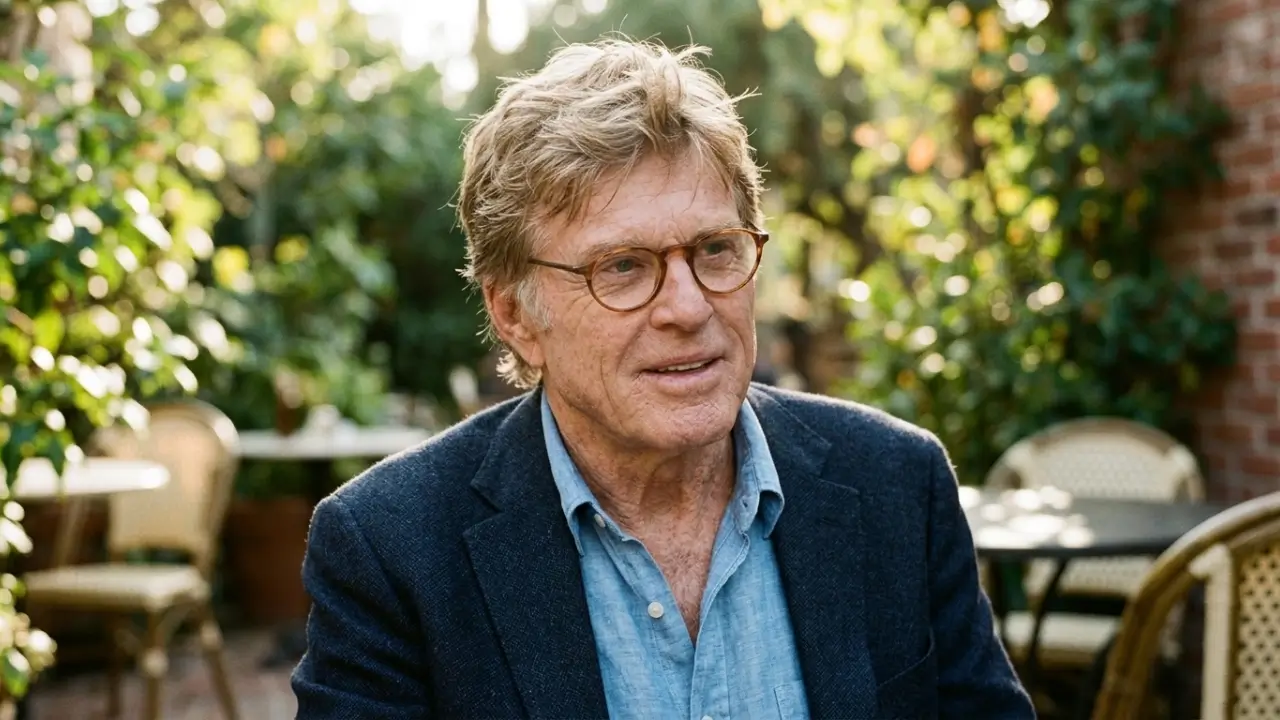
Robert Redford net worth was widely estimated at US$200 million at the time of his death in September 2025—about €178.5 million using the October 10, 2026 exchange rate. But the figure is an estimate, not a verified inventory of his estate: the public record does not provide a complete breakdown of his assets, debts, private investments, or inheritance arrangements.
The more revealing story is not simply how much Redford accumulated. It is how he used his fame and business success to build institutions, back independent filmmakers, and protect land—turning private wealth into a cultural and environmental legacy.
Table of Contents
Estimated net worth at a glance
The figures below offer a contextual estimate, not a disclosed account of Redford’s estate. Public reporting places his overall wealth near US$200 million, but it does not establish the exact value of each asset category. The euro conversion uses approximately US$1 = €0.8926, the rate reported for October 10, 2026.
| Asset or value category | Estimated value in euros | What can be said publicly |
|---|---|---|
| Total estimated net worth | €178.5 million | Commonly reported estimate of US$200 million; not an official estate valuation. |
| Film, directing and producing income | Not publicly itemized | A major source of wealth across a career spanning more than six decades. |
| Real estate and land interests | Not publicly itemized | Included properties and land in Utah and California; some holdings were sold or placed under conservation protections. |
| Sundance-related business interests | Not publicly itemized | Redford’s ownership changed over time; the resort sale price was not disclosed. |
| Cash, investments and other assets | Not publicly itemized | No complete public balance sheet is available. |
This table deliberately avoids dividing the total into invented property values. A familiar problem with celebrity-wealth coverage is that the headline estimate can look precise while its components remain hidden. In Redford’s case, the total is widely repeated, but the available public information does not support a reliable euro-by-euro breakdown of his estate.
Why the estimate needs context
A net-worth estimate is not the same as a bank balance, annual income, or the value of everything a person ever owned. It usually attempts to account for assets and business interests while subtracting liabilities, but the underlying calculations are rarely disclosed for private individuals. That limitation matters here: readers should treat Robert Redford Net Worth as a reported estimate, not as a confirmed probate figure.
The amount also cannot be understood without distinguishing between his personal wealth and the organizations associated with his name. The Sundance Institute, founded by Redford in 1981, is a nonprofit dedicated to supporting artists and independent film. Its resources and mission should not be counted as if they were simply Redford’s personal property. The institute helped make Sundance influential, but cultural reach does not automatically translate into personal equity.
The same distinction applies to businesses carrying the Sundance name. Redford sold a majority interest in the Sundance Catalog in 2004, while retaining a smaller stake according to contemporary reporting. The reported value of that deal ranged from US$20 million to US$40 million, but that was the business’s valuation range—not a confirmed statement of how much Redford personally received.
The Sundance Mountain Resort presents a similar puzzle. Redford agreed to sell the resort in 2020, but the parties did not disclose the sale price. The transaction included resort assets, while conservation protections were also central to the deal. Without the price and full terms, it is impossible to calculate precisely how much the sale contributed to his personal balance sheet.
The career behind the fortune
Redford’s wealth was built across several roles rather than through acting alone. He became one of the defining American screen stars of the 1960s and 1970s, appearing in films such as Butch Cassidy and the Sundance Kid, The Sting, The Way We Were and All the President’s Men. His appeal as a leading actor gave him commercial power, but his career widened beyond the parts in front of the camera.
In 1980, Redford made his directorial debut with Ordinary People. The film won the Academy Award for Best Picture, and Redford won Best Director. That achievement marked an important shift: he was no longer only a star hired to perform a role, but a filmmaker able to shape projects and take creative and commercial risks from behind the camera.
Acting, directing and producing can generate income in different ways. An actor may receive a salary for a film; a director or producer may earn fees or participate in a project’s returns; and a film’s continued availability can create later value through licensing or distribution arrangements. But the private terms of Redford’s individual contracts are not publicly laid out in a complete ledger. It would therefore be misleading to claim that any one film, role or deal accounts for a specific portion of his fortune.
The long span of his career matters too. A career lasting decades can provide repeated opportunities to earn, invest, and retain rights or interests, rather than depending on one peak year. Redford remained active as an actor and filmmaker late in life, while his professional identity also expanded into business, institution-building and advocacy.
That is why net worth Robert Redford searches often focus on a single round number, even though the more important financial story is cumulative. His wealth emerged from an unusually broad career: acting made him famous, filmmaking gave him influence over projects, and the Sundance ventures connected his name to a wider creative ecosystem.
Sundance as a business—and an idea
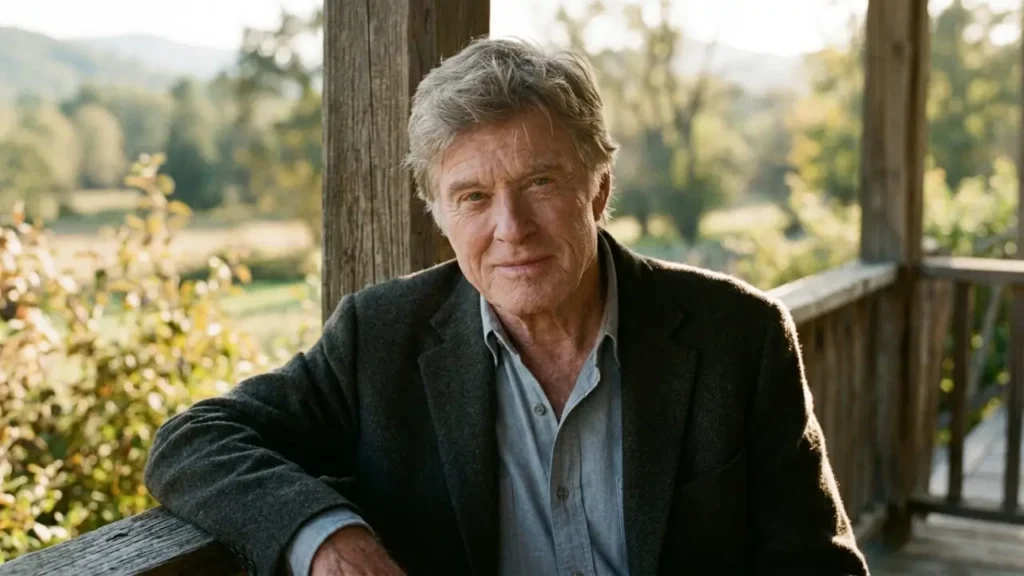
Redford’s most distinctive financial decision may have been to invest not only in projects, but in a place and an institution. He bought land in Utah and developed Sundance as a mountain resort. In 1981, he established the Sundance Institute; in 1985, the institute took over what was then the U.S. Film Festival, which became the Sundance Film Festival.
The idea was bigger than a festival. Independent filmmakers often have limited access to major studios, financing and distribution. Sundance offered development programs and a platform where unfamiliar directors could reach audiences and industry decision-makers. The festival helped bring attention to filmmakers including Quentin Tarantino, Steven Soderbergh, Paul Thomas Anderson and Darren Aronofsky.
That influence is a form of legacy, but it should not be confused with a personal asset value. Redford’s name became associated with opportunity for filmmakers, and the Sundance identity became widely recognized. Yet the Institute’s nonprofit work and the commercial businesses linked to the brand are separate from his personal estate. The distinction matters when interpreting claims about Robert Redford Net Worth: an organization’s cultural impact cannot be added to an individual’s wealth as though it were cash in a portfolio.
The resort sale also showed that a business transaction can carry aims beyond maximizing the disclosed sale price. The price was not made public, and reporting described land preservation as part of the arrangement. The resort’s acreage included land protected through conservation easements, while Redford and his family also partnered with Utah Open Lands to protect additional habitat.
That combination—commercial ownership alongside conservation commitments—offers a more useful lens on Redford’s business life than the idea of a celebrity simply collecting valuable properties. He built and later sold an enterprise, but the surrounding land and the conditions attached to it were part of the story.
Land, assets and the limits of a breakdown
Real estate receives considerable attention in reports about Redford’s fortune. Over the years, he owned or maintained homes and land in several locations, and some properties were sold. In 2019, he sold a Napa Valley estate for a reported US$7 million; in 2024, a Tiburon property was reported sold for about US$4.65 million. A Utah ranch was listed for sale, but a listing price is not proof of a final sale price or of proceeds received.
These transactions are useful clues, not a full property ledger. A property’s sale price does not reveal the owner’s original purchase price, renovation costs, taxes, financing, ownership structure or net proceeds. Nor does a sale price tell us whether the proceeds remained invested, were donated, or were used for other purposes.
Conservation complicates the idea of land as purely financial wealth. Redford and his family worked with Utah Open Lands to permanently protect more than 300 acres, while earlier conservation efforts also involved substantial land in the region. Protected acreage can hold ecological and community value while being restricted from ordinary development. That means land’s public benefit may be more significant than its potential resale value.
A careful account of robert redford’s net worth therefore needs two parallel measures. One is financial: the estimated value of assets after liabilities. The other is legacy-based: the institutions, creative opportunities and protected landscapes that endure. These measures overlap in Redford’s life, but they are not interchangeable.
What happens to the legacy now?
Redford died at age 89 on September 16, 2025, at his home in Utah. His death makes the question of future plans different from the usual celebrity profile: the relevant issue is now how his family, the institutions he founded, and the organizations involved in conservation carry forward work he helped establish.
Public reporting has named his wife, artist Sibylle Szaggars, and daughters Shauna and Amy among his surviving immediate family. However, a publicly verified, complete accounting of his estate or its distribution is not available in the information reviewed here. Any confident claim about who inherited specific properties or what share each person received would go beyond what has been established publicly.
The future of Sundance is likewise larger than a question of inheritance. The resort has new owners following the 2020 sale, while the Sundance Institute and festival have their own organizational structures and ongoing missions. The durable test of Redford’s influence is whether the ecosystem he helped create continues to give independent artists room to develop and find audiences.
For readers, the significance of Robert Redford Net Worth is not just that an iconic actor accumulated a fortune estimated at roughly €178.5 million. It is that financial success gave him the capacity to pursue a different kind of ambition: building a platform for filmmakers whose work might otherwise have been overlooked, and tying development to preservation in a landscape he valued.
The exact net worth robert redford left behind may never be known in full. The estimate remains a useful headline, but it is only a partial measure. His career earnings and business interests explain how wealth accumulated; Sundance and the protected Utah landscape help explain what he chose to do with influence. That is the more distinctive story behind redford net worth—a fortune whose meaning reaches beyond its estimated total.

1 Comment
Pingback: Gene Hackman Net Worth: Fortune and Estate - Celevo