


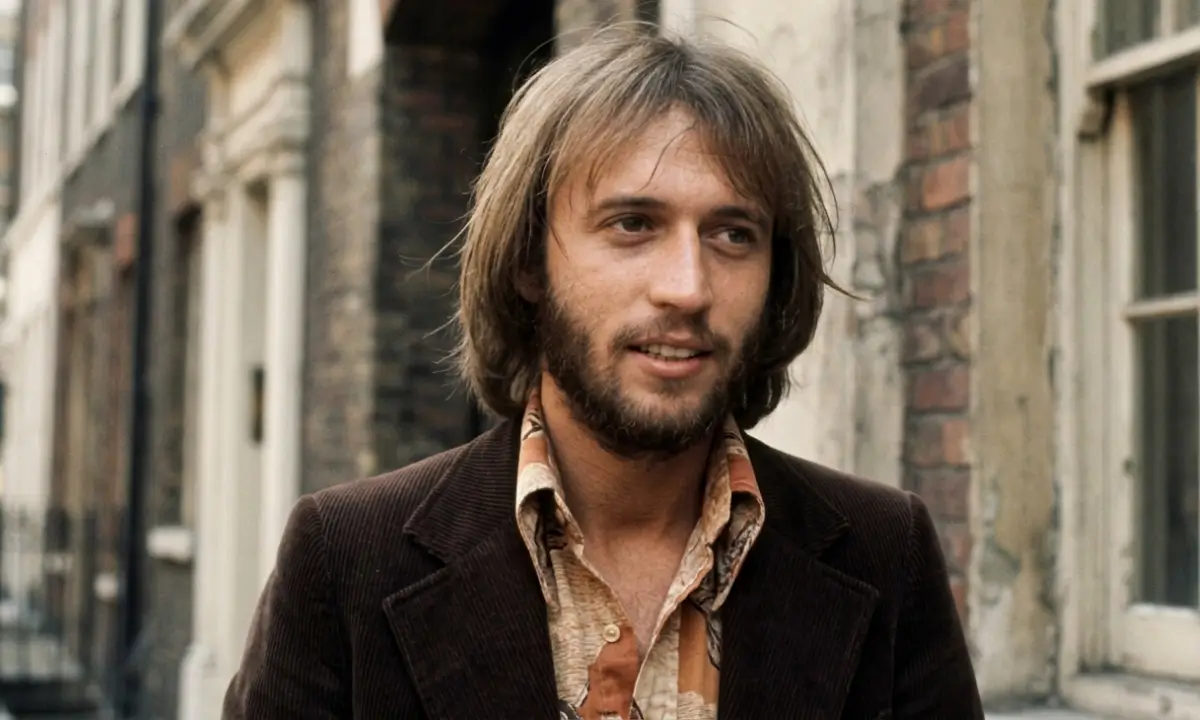
Maurice Gibb Net Worth remains one of the most compelling financial stories in popular music because it measures more than a singer’s lifetime earnings. It captures the value of songwriting, publishing, touring, production, real estate, and an estate that continues to benefit from the Bee Gees’ extraordinary catalogue long after Maurice’s death in 2003.
At the time of his death, Maurice Gibb’s estimated net worth was widely reported at around $100 million. That figure was not simply the result of record sales. It reflected decades of work as a founding member of the Bee Gees, a songwriter whose compositions became permanent fixtures of global culture, and a musician whose contributions to harmony, arrangement, and production shaped the group’s unmistakable sound.
Estimated Maurice Gibb Net Worth Table
The table below presents an illustrative breakdown of Maurice Gibb’s assets and wealth components in U.S. dollars. Exact private financial records are not public, so these are estimates based on reported estate information, property holdings, music-industry economics, and the continuing value of the Bee Gees catalogue.
| Asset / Wealth Component | Estimated Value in U.S. Dollars |
|---|---|
| Bee Gees songwriting and publishing interests | $35 million |
| Recorded-music royalties and catalogue participation | $20 million |
| Performance, touring, and historical recording income | $10 million |
| Production, arrangement, and session work | $3 million |
| Real estate: England, Miami Beach, Spain, and Bahamas | $18 million |
| Personal property, vehicles, artwork, and valuables | $2 million |
| Trust assets and family financial holdings | $7 million |
| Posthumous estate income and catalogue-related value | $5 million |
| Estimated Maurice Gibb Net Worth at death | $100 million |
This estimate places Maurice Gibb Net Worth at approximately $100 million at the time of his death. Some later estimates place the estate’s value lower, around $60 million to $90 million, depending on whether analysts count only liquid assets, exclude shared catalogue rights, or adjust for taxes, expenses, and changing valuations. The $100 million figure remains the most commonly cited benchmark.
Why Maurice Gibb Net Worth Still Matters
The interest in Maurice Gibb Net Worth continues because the Bee Gees are not a nostalgia act whose value faded with the disco era. Their songs remain commercially active through streaming, licensing, film soundtracks, tribute productions, reissues, and international radio play. Every time “Stayin’ Alive,” “How Deep Is Your Love,” “Night Fever,” “More Than a Woman,” or “Tragedy” is streamed, synchronized, or performed, the underlying music economy continues to operate.
Maurice was often viewed as the quieter Gibb brother, but financially and creatively he was central to the group. He played multiple instruments, contributed vocals, arranged material, and helped maintain the Bee Gees’ musical identity through changing trends. The net worth of Maurice Gibb therefore represents the value of a career built on consistency rather than spectacle.
His estate also matters because it holds an interest in one of the most valuable song catalogues in modern music history. The Bee Gees’ catalogue includes recordings, publishing rights, unreleased material, compilation assets, and audiovisual projects. In 2016, Capitol Records entered a long-term worldwide agreement covering the group’s entire recorded catalogue, with Barry Gibb and the estates of Robin and Maurice Gibb involved in campaigns to renew interest in the music. That arrangement demonstrated that the Bee Gees’ commercial life did not end with Maurice’s passing.
A Different Kind of Music Fortune
Many celebrity fortunes are built around touring income, brand endorsements, or a short run of blockbuster hits. Maurice Gibb’s wealth followed a different pattern. The Bee Gees had already achieved major success in the 1960s, but their financial peak arrived in the late 1970s, when the Saturday Night Fever soundtrack turned them into a global phenomenon.
That period created an unusually durable financial foundation. The soundtrack became one of the best-selling albums of all time, while the group’s songs entered films, television, advertising, dance culture, and later streaming playlists. Maurice’s share of that success was not a one-time payday. It became a long-term income stream.
This is why Maurice Gibb Net Worth should be understood as an estate value as much as a personal wealth estimate. His widow, Yvonne Gibb, inherited significant assets, including rights connected to his musical compositions and image. His will also provided for trusts for his children, Adam and Samantha. The structure of that estate helped preserve wealth across generations rather than allowing it to dissipate after his death.

The Real Estate Behind the Fortune
Real estate formed a visible and important part of Maurice’s wealth. Reports from his estate records indicated that he and Yvonne owned six homes: two in England, two in Miami Beach, one in Spain, and one in the Bahamas. That portfolio reflected both financial security and the international life of a globally successful musician.
Miami Beach was especially significant. Maurice and Yvonne purchased a waterfront mansion there in 2006 for $5 million, after Maurice’s death, when Yvonne continued managing family assets. The property later sold for $5.1 million in 2019. While that particular sale did not produce a dramatic gain, Miami’s luxury waterfront market has appreciated sharply over time, making the broader real-estate strategy financially sensible.
The England properties carried additional emotional and historical value. Maurice had owned a large country mansion in Esher from the 1970s until his death. These homes were not merely luxury purchases; they were part of a family’s long-term financial base. For a musician whose income could fluctuate with album cycles and industry changes, property provided stability.
Maurice Gibb’s Role in the Bee Gees’ Wealth
It is easy to focus on Barry Gibb when discussing the Bee Gees’ finances because Barry remained active as a performer and songwriter after the deaths of his brothers. But Maurice’s contribution was indispensable. He was the group’s musical anchor: a multi-instrumentalist who played bass, keyboards, guitar, and other instruments, while also shaping vocal arrangements and studio textures.
The Bee Gees’ success was built on the interaction of three distinct voices. Barry’s falsetto became iconic, Robin’s vibrato gave the group emotional urgency, and Maurice provided harmonic depth, instrumental versatility, and production judgment. Without Maurice, the Bee Gees’ sound would have been materially different.
That creative importance translated directly into financial value. Songwriting credits, publishing participation, and ownership interests in recordings gave Maurice a stake in the group’s long-term earnings. The net worth of Maurice Gibb was therefore tied not only to albums sold during his lifetime but also to the continuing commercial life of songs he helped create.
Comparing Maurice and Barry Gibb
Barry Gibb’s net worth is commonly estimated at around $140 million, making him the wealthiest surviving Bee Gee. Barry’s advantage comes from continued activity after Maurice and Robin died, including solo projects, production work, live performances, and ongoing control over major aspects of the Bee Gees’ legacy.
| Person | Estimated Net Worth | Main Wealth Drivers |
|---|---|---|
| Maurice Gibb | $100 million at death | Bee Gees royalties, publishing, real estate, estate assets |
| Barry Gibb | $140 million | Songwriting, royalties, touring, production, real estate |
| Robin Gibb | Approximately $80 million estate value | Bee Gees catalogue, songwriting, posthumous royalties |
Searches for “net worth of Barry Gibb,” “Barry Gibb net worth,” and even the misspelled “Barry Gibbs net worth” often appear alongside Maurice Gibb Net Worth because audiences want to understand how the brothers’ fortunes compare. Barry’s higher figure does not diminish Maurice’s financial legacy. Rather, it highlights how the Bee Gees’ wealth was distributed across different roles, estates, and continuing income streams.
Barry also benefited from valuable real estate. His long-held Miami Beach waterfront estate became exceptionally valuable as the neighborhood evolved into one of the most expensive residential areas in the United States. Maurice’s Miami holdings were smaller in scale but still meaningful, and his international property portfolio demonstrated a diversified approach to wealth preservation.
The Power of Publishing Rights
The most important element in Maurice Gibb Net Worth is not cash, cars, or mansions. It is publishing.
When a song is written, it generates income through multiple channels: mechanical royalties from physical and digital sales, performance royalties from radio and public performance, synchronization fees from film and television, streaming royalties, and licensing income. A successful song can earn money for decades, and a catalogue of globally recognized hits can become a financial institution.
The Bee Gees’ catalogue is unusually strong because their songs crossed genres and generations. “Stayin’ Alive” is instantly recognizable across dance music, film, fitness culture, and popular comedy. “How Deep Is Your Love” remains a standard for romantic ballads. “Night Fever” continues to define the disco era. These songs are not dependent on one format or one generation of listeners.
Maurice’s estate holds interests connected to his musical compositions, which means his family can continue to benefit from this intellectual-property engine. That is why Maurice Gibb Net Worth is not frozen in 2003. It evolves with the music industry.
Streaming Changed the Estate’s Value
Streaming has reshaped the economics of legacy artists. In earlier decades, catalogue income depended heavily on album sales, radio play, and physical formats. Today, a classic song can reach new listeners through playlists, short-form video, film trailers, television shows, and social media.
For the Bee Gees, streaming created a second life for their music. Younger audiences discovered the group through viral clips, dance trends, film references, and curated playlists. This renewed exposure supports streams, merchandise interest, documentary viewership, and licensing demand.
The 2016 Capitol agreement was strategically important because it brought the Bee Gees’ recorded catalogue under a major global marketing structure. It included studio albums, soundtracks, compilations, unreleased recordings, and long-form audiovisual projects. For Maurice’s estate, such agreements help ensure that his work remains visible rather than becoming a forgotten archive.
Future Implications for the Gibb Estate
The future value of Maurice Gibb Net Worth depends on several factors: streaming growth, licensing demand, catalogue management, family decisions, and the broader market for classic music assets.
Music catalogues have become attractive investments because they offer relatively predictable royalty streams. Major companies, private-equity firms, and entertainment groups have paid substantial sums for rights to legendary artists’ work. While the Bee Gees’ catalogue is already tied to major industry partnerships, the underlying value of the songs remains immense.
Future opportunities could include:
- Expanded deluxe reissues and remastered editions.
- Documentary projects exploring the Bee Gees’ full career.
- Biographical films and licensed stage productions.
- Greater use of Bee Gees songs in film, television, and advertising.
- New compilation releases aimed at streaming audiences.
- Preservation and release of unreleased recordings, subject to family and label approval.
Each of these possibilities can increase public awareness and, in turn, royalty income. Maurice’s estate is therefore positioned to remain financially relevant for decades.
The Human Side of the Fortune
Behind the numbers, Maurice Gibb Net Worth tells a human story. Maurice was not simply a beneficiary of fame; he was a working musician who spent much of his life in studios, on stages, and in the demanding company of his brothers. The Bee Gees experienced enormous success, but also personal loss, creative pressure, addiction struggles, public criticism, and the challenge of reinventing themselves across several musical eras.
Maurice died suddenly in January 2003 at age 53, after suffering a heart attack while awaiting emergency surgery. His death ended the Bee Gees as a performing trio and left a profound gap in the group’s identity. Barry and Robin initially considered continuing under the Bee Gees name, but ultimately retired it as a representation of all three brothers together.
That decision gives the financial story additional weight. The Bee Gees’ name now represents a complete creative partnership, not merely a brand. Maurice’s estate is part of that legacy, and the wealth attached to it is inseparable from the music he helped create.
What Maurice Gibb Net Worth Reveals
Maurice Gibb Net Worth reveals how lasting wealth in music is built. It is rarely created by one hit or one successful tour. It comes from ownership, authorship, timing, reinvention, and the ability of a song to remain useful to culture long after its original release.
Maurice’s estimated $100 million fortune was substantial, but its deeper significance lies in its structure. He left behind property, trusts, publishing interests, and a continuing connection to one of popular music’s most valuable catalogues. His wife and children inherited not only financial security but also responsibility for preserving a major artistic legacy.
As long as audiences continue to dance to “Night Fever,” sing along with “How Deep Is Your Love,” and recognize the opening pulse of “Stayin’ Alive,” Maurice Gibb’s financial and creative influence will remain alive. His net worth is therefore best understood not as a final number, but as a living measure of the Bee Gees’ enduring place in global music.

1 Comment
Pingback: Robin Gibb Net Worth: His $80M Music Legacy - Celevo