


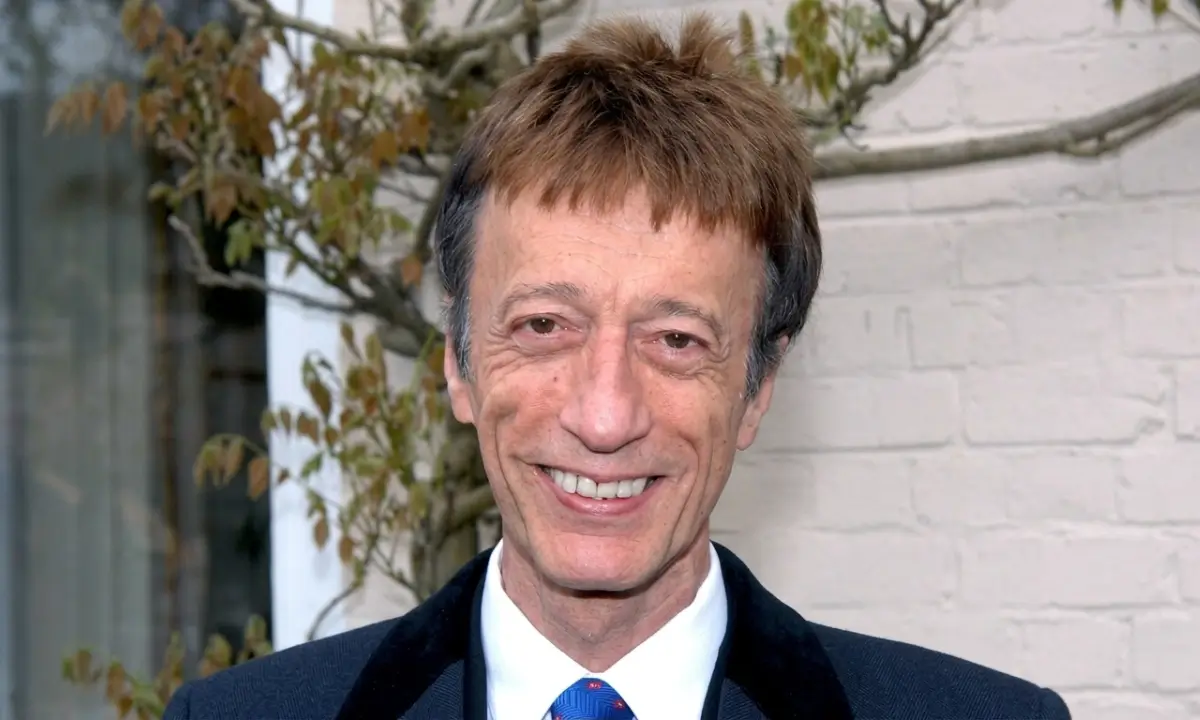
Robin Gibb Net Worth remains one of the most searched topics in music finance because it captures something larger than a celebrity balance sheet. It tells the story of a singer whose unmistakable vibrato helped turn the Bee Gees into one of the most commercially powerful groups in popular music, and whose estate continues to benefit from a catalogue that has outlived changing formats, trends, and generations of listeners.
At the time of his death in May 2012, Robin Gibb Net Worth was widely estimated at around $80 million. Some estate reports suggested a higher gross value, reflecting the difference between a person’s lifetime net worth and the total value of assets, intellectual property, trusts, and future royalty streams held through an estate. That distinction matters: Robin’s wealth was not simply the result of hit records, but of decades of songwriting ownership, touring, property decisions, licensing, and careful posthumous management.
Table of Contents
Robin Gibb Net Worth at a Glance
The most commonly cited estimate places Robin Gibb Net Worth at approximately $80 million at the time of his death. However, the value of his estate, including assets and future income potential, has often been estimated higher. The table below reflects a practical breakdown of the major asset categories associated with his financial legacy.
| Asset Category | Estimated Value in U.S. Dollars | Explanation |
|---|---|---|
| Music publishing and songwriting royalties | $30 million | Long-term income from Bee Gees compositions, solo work, and licensing |
| Recorded-music royalties and streaming | $15 million | Income from album sales, digital streaming, compilations, and catalog usage |
| Real estate holdings | $20 million | Properties in England, including his Oxfordshire estate, plus former Miami holdings |
| Touring and live-performance earnings | $8 million | Historical earnings from Bee Gees tours and live appearances |
| Solo recordings and collaborations | $3 million | Revenue from Robin’s solo albums and outside projects |
| Personal property, vehicles, art, and memorabilia | $2 million | Collectibles, personal assets, and items connected to his career |
| Cash, investments, and trusts | $2 million | Liquid assets and estate-planning structures |
| Estimated total net worth | $80 million | Commonly cited estimate at the time of his death |
This table should be read as an estimate rather than an audited financial statement. Celebrity estates are private, and the true value of a music catalogue can vary significantly depending on how royalties are structured, how ownership is divided, and how future licensing deals are negotiated.
Why Robin Gibb Net Worth Still Matters
The interest in Robin Gibb Net Worth is not merely curiosity about a famous musician’s money. It is a case study in how a music catalogue becomes a long-term financial asset. When a song enters film, television, advertising, streaming playlists, tribute performances, and international radio rotation, it can generate income long after the artist has stopped recording or touring.
Robin Gibb was central to that process. As a founding member of the Bee Gees alongside Barry Gibb and his twin brother Maurice, he co-wrote and performed on songs that became permanent fixtures of popular culture. The Bee Gees sold well over 200 million records worldwide, and their late-1970s disco era transformed them from successful rock-pop artists into global superstars.
That success created a financial structure that still functions today. Publishing royalties, mechanical royalties, performance royalties, synchronization fees, and streaming income can all flow from a single well-managed song. For an artist with a catalogue as recognizable as the Bee Gees’, the financial value is not frozen at the moment of death; it can rise when a film revives interest, a documentary introduces the music to younger audiences, or a new generation discovers a classic through short-form video and streaming platforms.
The Man Behind the Money
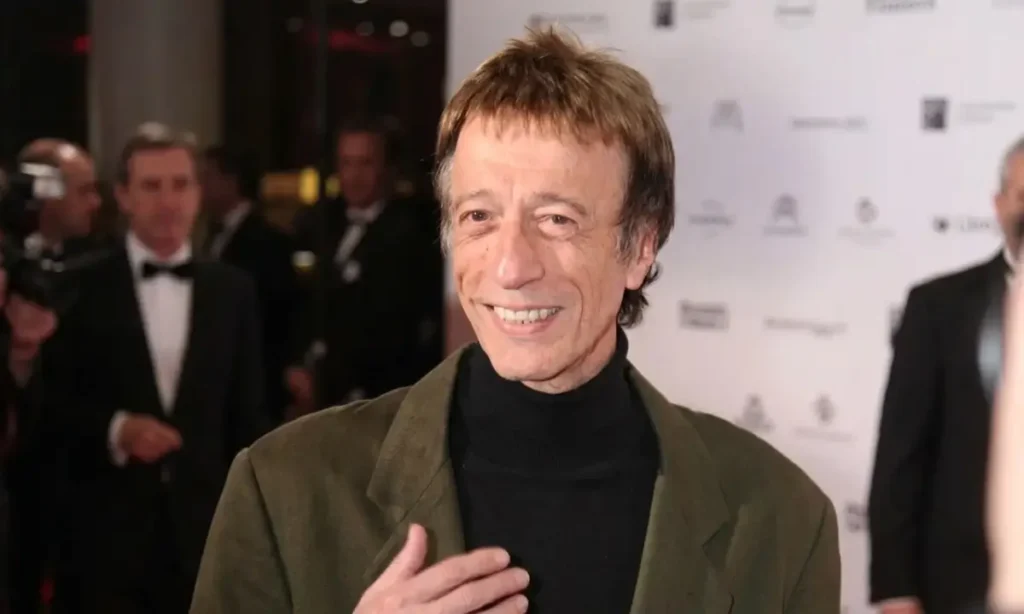
Robin Hugh Gibb was born on December 22, 1949, on the Isle of Man and grew up in a family that would become one of popular music’s most remarkable success stories. He formed the Bee Gees with his brothers Barry and Maurice, and the group’s evolution across the 1960s, 1970s, 1980s, and 1990s made them one of the few acts to succeed in multiple musical eras.
Robin’s voice was one of the group’s defining signatures. His high, trembling vocal delivery gave songs an emotional urgency that separated the Bee Gees from many of their contemporaries. While Barry often carried the lead on some of the group’s biggest disco-era hits, Robin’s contributions were essential to the band’s identity, especially in the earlier years and in songs where his vocal texture became the emotional center.
That artistic importance translated directly into financial value. A singer who is also a songwriter and co-owner of a group’s intellectual property holds a much stronger financial position than a performer who simply records material written by others. Robin was not only a voice; he was a creator with a stake in the music itself.
How the Bee Gees Built the Fortune
The foundation of Robin Gibb Net Worth was the Bee Gees’ extraordinary commercial reach. The group’s career began in the late 1950s and expanded through the 1960s, but the late 1970s made them a financial phenomenon. Their work on the Saturday Night Fever soundtrack placed the Bee Gees at the center of one of the most successful soundtrack eras in music history.
That period produced hits that continue to earn money decades later. Songs such as “Stayin’ Alive,” “How Deep Is Your Love,” “Night Fever,” and “More Than a Woman” became more than chart singles; they became cultural reference points. Their continued presence in films, television shows, advertisements, dance culture, and streaming playlists gives the catalogue an unusually durable earning life.
The Bee Gees were also unusually versatile. They wrote for themselves, but their songs were recorded by other major artists, including Barbra Streisand, Dionne Warwick, Kenny Rogers, Dolly Parton, and Celine Dion. Songwriting credits can be especially valuable because they generate royalties whenever another artist records, performs, or licenses the composition.
This is an important expert insight: performers earn from recordings, but songwriters can earn from the underlying composition across countless versions and uses. Robin’s role as both performer and writer gave his financial legacy multiple layers of protection.
Real Estate and Personal Assets
Real estate formed a visible part of Robin Gibb’s wealth. He owned significant property in England, including a large estate in Thame, Oxfordshire, and he also held valuable Miami property during his lifetime. His Miami real estate decisions proved especially lucrative, with reports indicating that he sold a large Miami home for approximately $16 million in 2008.
Property gave his wealth a tangible dimension beyond royalties. Music income can fluctuate with industry conditions, but real estate can preserve value, provide lifestyle benefits, and occasionally produce major one-time gains. In Robin’s case, property was not just a place to live; it was part of a broader asset strategy.
His personal collection also reflected the tastes of a successful artist. Cars, art, memorabilia, and career-related items may not dominate a net worth calculation, but they can add meaningful value, particularly when connected to a globally recognized musical legacy.
The Estate After Robin’s Death
Robin Gibb died on May 20, 2012, after a long battle with cancer. His death did not end the financial story; it changed its structure. His widow, Dwina Murphy-Gibb, and his children became central figures in managing and preserving the estate.
Estates involving major music catalogues require careful planning. Royalties must be collected, publishing rights must be administered, licensing opportunities must be evaluated, and tax obligations must be handled across jurisdictions. A well-managed estate can turn a deceased artist’s catalogue into a stable income source for family members and future heirs.
Robin’s estate reportedly included provisions for his widow and children, with trusts and asset allocations designed to protect the family’s long-term interests. This is where Robin Gibb Net Worth becomes more than a number: it represents financial security created through art and preserved through planning.
Comparing Robin and Barry Gibb
Any discussion of Robin Gibb Net Worth naturally leads to the net worth of Barry Gibb. Barry, the last surviving Gibb brother, is generally estimated to have a net worth of around $140 million, although some higher estimates place his wealth closer to $180 million depending on how catalogue value and future income are calculated.
| Person | Estimated Net Worth | Main Financial Strengths |
|---|---|---|
| Robin Gibb | $80 million at death | Bee Gees royalties, songwriting, real estate, estate assets |
| Barry Gibb | $140 million to $180 million | Continued catalogue ownership, producing, touring, licensing, and property |
| Maurice Gibb | Around $60 million | Bee Gees royalties, songwriting, and estate assets |
The net worth of Barry Gibb is higher partly because he survived his brothers and remained active in music for longer. Barry continued to write, produce, perform, and oversee the Bee Gees legacy after Robin and Maurice died. He also retained a powerful position in the group’s creative and commercial history.
Barry Gibb Net Worth also benefits from the same forces that support Robin’s estate: streaming, licensing, film and television use, tribute projects, and the enduring appeal of the Bee Gees sound. But Barry’s continued personal involvement gives him more direct control over how the legacy is presented and monetized.
That comparison should not be read as a competition. The brothers built a shared artistic empire, and their individual wealth reflects different roles, timing, longevity, and estate structures. Robin’s contribution remains inseparable from the Bee Gees’ success, even though Barry’s longer post-2012 career has expanded his personal financial position.
The Future Value of Robin’s Legacy
The future of Robin Gibb Net Worth depends largely on the durability of the Bee Gees catalogue. So far, the signs are strong. Classic music has gained renewed value in the streaming era, where older songs can reach listeners without the barriers of radio formats, physical distribution, or generational memory.
Documentaries, biopics, anniversary reissues, tribute concerts, and social-media trends can all revive interest in an artist’s work. The Bee Gees have already benefited from this cycle repeatedly. Their music is frequently rediscovered by younger audiences through film scenes, dance trends, covers, and viral clips.
There is also potential for expanded licensing. A major film, stage production, or high-profile advertising campaign can significantly increase catalogue income in a short period. For estates, the challenge is to protect artistic integrity while taking advantage of commercial opportunities. The most valuable music estates are those that balance reverence for the original work with smart, selective licensing.
Robin’s estate also has a broader cultural role. Preserving his story means preserving the history of the Bee Gees, the evolution of popular music, and the contribution of a singer whose voice helped define several eras. That cultural value supports the financial value, because audiences continue to seek out music that feels timeless.
A Legacy Measured in More Than Dollars
Robin Gibb Net Worth is best understood as the financial expression of an artistic life. The $80 million estimate is impressive, but it does not fully capture the scale of his contribution to popular music. His voice, songwriting, and presence helped create a catalogue that has generated income for more than half a century and will likely continue to do so.
His story also offers a lesson for modern artists. Ownership matters. Songwriting credits matter. Long-term rights management matters. And the ability to create music that remains emotionally relevant across generations may be the most valuable asset of all.
Robin Gibb may no longer be performing, but his work continues to travel through radios, films, playlists, and memories. In that sense, his true fortune is not only measured in dollars. It is measured in the continued life of the music he helped create—and in the fact that Robin Gibb Net Worth remains a subject of fascination because the legacy behind it has never faded.

1 Comment
Pingback: Lilly Singh Net Worth: $20M Career and Assets - Celevo