


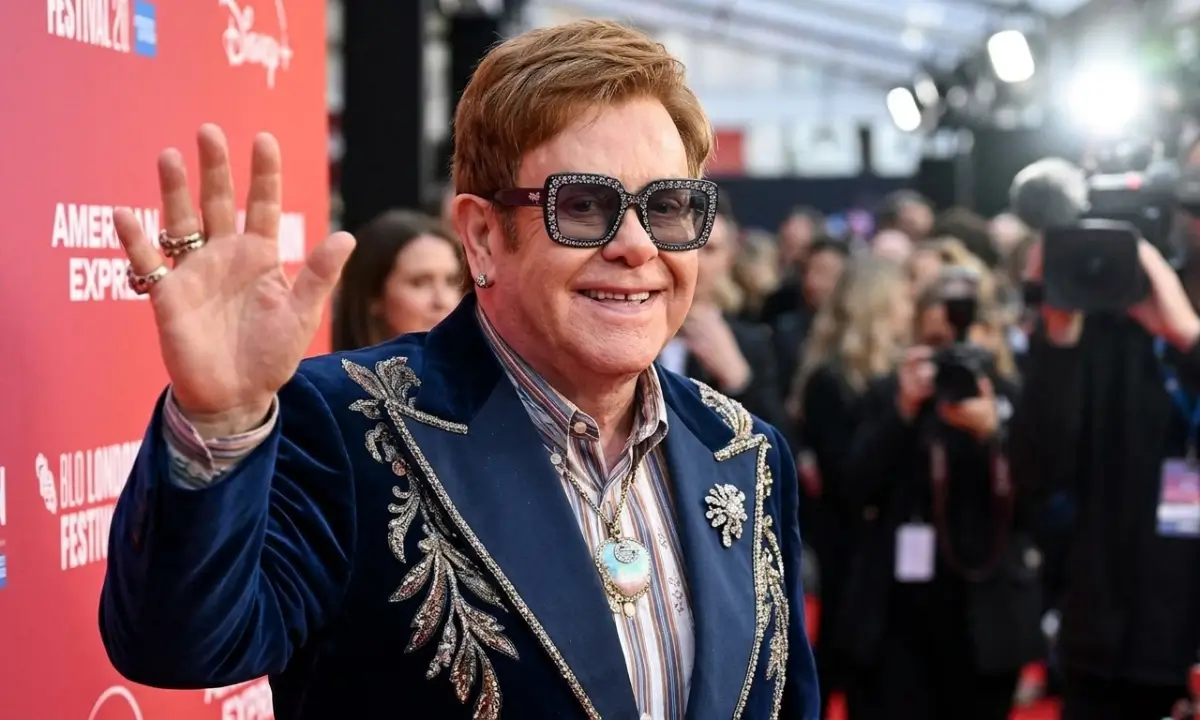
Elton John Net Worth is estimated at roughly €540 million in 2026, based on a widely cited valuation of about $645 million and prevailing currency conversion. The figure matters because it captures more than a famous singer’s bank balance: it reflects a rare combination of enduring songwriting royalties, record-breaking touring, property, art, business interests, and a carefully protected creative legacy.
The question “what is Elton John’s net worth?” has become more interesting now that he has stepped back from full-scale touring. His wealth is no longer being built primarily by nightly stadium shows; it is increasingly sustained by assets that continue to earn while he focuses on family, philanthropy, film projects, and selective creative work.
Table of Contents
Why the figure matters
Elton John Net Worth is a useful lens through which to understand how modern music wealth actually works. A hit song does not simply earn money when it is released; it can generate income for decades through streaming, radio play, synchronization in films and adverts, covers, live-performance royalties, and international licensing.
For Elton John, that system has been exceptionally powerful. Songs such as “Your Song,” “Rocket Man,” “Tiny Dancer,” “Goodbye Yellow Brick Road,” and “Candle in the Wind” have become part of popular culture, giving his catalogue a durability that few artists achieve.
The estimate also highlights a broader shift in the music industry. Artists who own or control publishing rights can turn creative work into a long-term financial asset, while those who sell rights too early may lose much of the future upside. Elton John’s fortune illustrates why ownership, licensing, and catalogue management now sit at the centre of celebrity finance.
Estimated asset breakdown
| Asset category | Estimated value in euros | Share of estimated net worth | Why it matters |
|---|---|---|---|
| Music catalogue, publishing and royalty interests | €180 million | 33% | Ongoing income from streaming, licensing, radio, covers and sync deals |
| Touring and live-performance earnings retained over time | €120 million | 22% | Decades of concerts, residencies and the Farewell Yellow Brick Road tour |
| Real estate portfolio | €65 million | 12% | Homes and investment properties in the UK and United States |
| Art collection and collectibles | €75 million | 14% | High-value, non-liquid assets with potential long-term appreciation |
| Business interests, investments and cash | €60 million | 11% | Diversification beyond music and protection against income volatility |
| Other personal assets and residual valuation | €40 million | 8% | Includes items difficult to value publicly, such as memorabilia and private holdings |
| Estimated total | €540 million | 100% | Approximate 2026 valuation |
What is Elton John’s net worth?
What’s Elton John’s net worth? The most credible current estimate places it at approximately $645 million, or about €540 million. This is an estimate rather than an audited public balance sheet, because private investments, artwork, property valuations, tax arrangements, and the value of music rights are not disclosed in full.
The number should therefore be read as a reasoned valuation of his identifiable wealth, not as cash sitting in a single account. Much of net worth Elton John holds is tied up in assets that can appreciate, produce income, or take time to sell.
These categories are estimates, not official disclosures. The central point is that Elton John Net Worth is diversified: it does not depend on one album, one property, or one final tour.
The catalogue: the quiet engine
The most important part of Elton John Net Worth is likely his music catalogue and associated royalty interests. His recordings have sold more than 300 million copies worldwide, placing him among the best-selling recording artists in history.
That scale matters because every stream, broadcast, public performance, cover version, and licensed use can create revenue. A song written decades ago can still appear in a film, television series, advertisement, stage production, or social-media clip, creating income long after the original release.
His songwriting partnership with Bernie Taupin is especially significant. Together, they created a catalogue with unusually broad emotional reach: songs about loneliness, fame, love, ambition, and reinvention. That emotional recognition helps explain why the music remains commercially valuable across generations.
Unlike an artist dependent on new releases, Elton John has a back catalogue that functions almost like an income-producing property portfolio. The exact annual return varies with streaming trends and licensing activity, but industry estimates often place catalogue-related music income in the tens of millions of dollars over time.

Touring: wealth built in public
Touring has been another foundation of net worth Elton John has accumulated. Over his career, he has performed thousands of concerts across dozens of countries, turning live performance into one of the most reliable parts of his financial story.
The Farewell Yellow Brick Road tour was particularly consequential. Running from 2018 to 2023, it spanned more than 300 shows and grossed more than $900 million, making it one of the most successful tours in music history.
That does not mean Elton John personally kept every euro of gross revenue. Touring involves substantial costs: venues, production, travel, crew, promotion, taxes, management, and insurance. Still, a tour of that scale can generate enormous net earnings for the artist, especially when ticket demand, merchandise, sponsorship, and premium seating are strong.
The tour also changed the structure of his wealth. Rather than relying on future tours to maintain income, he created a major financial milestone before retiring from the road, while leaving behind a catalogue that continues to earn.
Property and lifestyle assets
Real estate is a visible but less dominant component of Elton John Net Worth. He has owned notable properties in London and Los Angeles, including a long-held Holland Park townhouse and Beverly Hills homes acquired with his husband, David Furnish.
Property serves two purposes in a portfolio like this. First, it provides personal security and lifestyle value. Second, prime real estate can preserve capital and appreciate over time, particularly in established markets such as central London and parts of Los Angeles.
His reported spending has often attracted attention, from flowers and fashion to art and luxury travel. Yet the more financially meaningful point is that a portion of his wealth has been placed into tangible assets rather than consumed entirely.
Art is especially important. Reports have valued his collection in the hundreds of millions of dollars at the upper end, although such valuations are inherently uncertain because art markets depend on provenance, condition, artist reputation, and buyer demand.
Why this net worth news matters
The attention around what is Elton John’s net worth is not merely curiosity about celebrity riches. It offers a case study in how an artist can convert cultural influence into financial resilience.
Many musicians earn heavily during peak touring years but struggle to maintain income once live performance slows. Elton John’s position is different because his wealth rests on intellectual property, brand equity, property, investments, and a global audience that continues to discover his work.
His story also reflects a wider transformation in the entertainment economy. Streaming has reduced some traditional recorded-music income, but it has made older catalogues more accessible worldwide. A classic song can now reach new listeners through playlists, film soundtracks, short-form video, and international streaming platforms without requiring a new physical release.
That is why Elton John Net Worth remains relevant even after his farewell tour. The central asset is not a current hit single; it is a vast body of work with continuing cultural and commercial life.
Expert-level insight: ownership is the advantage
The most valuable lesson in net worth Elton John represents is the importance of retaining control where possible. Publishing rights, master recordings, licensing decisions, and brand partnerships can determine whether an artist receives a short-term payment or builds a lasting financial base.
Elton John’s business interests, including Rocket Music, have allowed him to participate in the commercial side of the industry rather than relying solely on record-label arrangements. That structure gives an artist more leverage when negotiating film placements, advertising campaigns, touring deals, and catalogue-related transactions.
There is also a timing element. Artists who sell their publishing catalogues may receive a large immediate payment, but they give up future income and potential appreciation. Elton John’s long-term approach has allowed him to benefit from the compounding value of songs that have remained popular for more than 50 years.
This does not mean holding every asset forever is always the best choice. Markets change, tax rules change, and liquidity needs arise. But his case shows why musicians increasingly treat catalogues as strategic assets, similar to property or a business stake.
Future implications and plans
The future of Elton John Net Worth will likely be shaped less by touring and more by legacy management. His catalogue should continue producing royalties, while selective film, documentary, stage, and licensing projects can introduce his music to new audiences.
His autobiography, public appearances, charitable work, and collaborations also help maintain the Elton John brand. In celebrity finance, attention is not merely vanity: it can increase streaming activity, revive interest in older recordings, and support the value of licensing opportunities.
Philanthropy will remain central to his public legacy. Through the Elton John AIDS Foundation, he has directed substantial resources toward HIV and AIDS prevention, treatment, and advocacy. While charitable giving reduces personal wealth in a narrow accounting sense, it also defines the purpose behind decades of earnings.
The likely financial direction is stability rather than explosive growth. A retired touring artist with a mature catalogue may not repeat the income of a record-breaking world tour, but recurring royalties, appreciating assets, and selective projects can preserve and gradually increase total wealth.
A fortune built on reinvention
The unique narrative behind Elton John Net Worth is not simply that he became rich through fame. It is that he repeatedly reinvented himself without abandoning the core creative identity that made him valuable in the first place.
He began as a pianist and songwriter, became a global pop superstar, survived personal and professional crises, returned to commercial success, built a major touring business, and ultimately turned his career into a durable financial legacy. That ability to evolve is why the question “what’s Elton John’s net worth?” remains compelling.
At approximately €540 million, Elton John Net Worth represents more than luxury homes, artwork, or past tour receipts. It represents the financial value of songs that people still play, films that still use his music, audiences that still buy tickets to tribute shows, and a name that still carries global recognition.
For younger artists, the lesson is clear: creative ownership, consistent quality, audience trust, and diversification can matter as much as a single viral moment. For audiences, the figure is a reminder that the most valuable music is often not the music that disappears after a chart run, but the music that remains part of people’s lives for generations.

3 Comments
Pingback: Calvin Klein Net Worth: Fortune and Career - Celevo
Pingback: Casey Neistat Net Worth: €15M Wealth Story - Celevo
Pingback: Paul McCartney Net Worth: Fortune Behind the Music - Celevo