


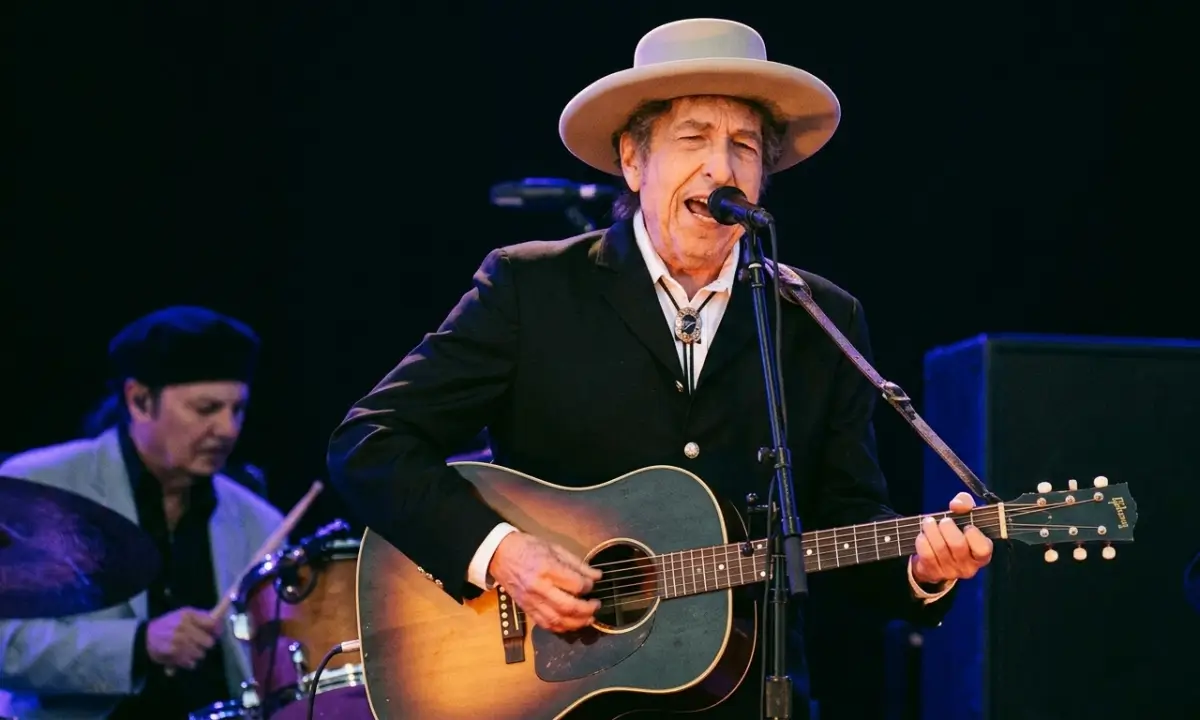
Bob Dylan Net Worth is estimated at roughly $500 million, placing him among the wealthiest singer-songwriters in modern music history. The figure is not simply the result of album sales or touring; it reflects a rare combination of artistic influence, disciplined ownership of creative assets, and two of the most consequential music-rights transactions ever completed.
What makes the Bob Dylan Net Worth story especially compelling is that Dylan did not become wealthy by chasing commercial trends. He built a body of work that remained culturally valuable for more than 60 years, then converted that value into financial security at a moment when music catalogs were commanding extraordinary prices. His wealth is therefore less a story of celebrity spending and more a case study in intellectual property, timing, and long-term creative control.
Table of Contents
Why Bob Dylan Net Worth matters
The interest in Bob Dylan Net Worth goes beyond curiosity about a famous musician’s bank balance. Dylan’s financial position illustrates how songwriting can become a durable asset class, comparable in some respects to real estate, franchises, or established businesses. A great song can generate income through streaming, radio play, covers, films, advertisements, live performances, and licensing for decades after it is written.
For younger artists, Dylan’s example shows that ownership matters. While performers may earn substantial income from concerts and merchandise, the underlying publishing rights and master recordings can become the most valuable part of a music career. Dylan understood, or at least benefited from, the fact that his songs were not merely cultural artifacts: they were income-producing intellectual property.
The net worth of Bob Dylan also matters because it marks a shift in the music industry. In recent years, major companies and investment firms have paid enormous sums for catalogs by established artists. Dylan’s sales helped define that market, demonstrating that a legendary songwriter’s work can be valued not only for nostalgia but for predictable long-term revenue.
Bob Dylan Net Worth table
| Asset category | Estimated value in Euros | Explanation |
|---|---|---|
| Proceeds and retained value from songwriting catalog sale | €370 million to €490 million | Dylan sold rights to more than 600 compositions in a deal widely reported at $300 million to $400 million. |
| Proceeds and retained value from master-recording sale | €185 million to €245 million | Sony acquired rights to Dylan’s recorded catalog in a transaction estimated at $150 million to $200 million. |
| Cash, investments, and financial reserves | €45 million to €75 million | This category reflects capital preserved from career earnings, catalog sales, investments, and business income. |
| Real estate holdings | €20 million to €40 million | Dylan has historically held valuable residential property, particularly in California, alongside other assets connected to his long career. |
| Art, books, archives, and collectible assets | €10 million to €25 million | Dylan’s visual art, writings, memorabilia, and archival material contribute additional value beyond recorded music. |
| Business interests, including Heaven’s Door Spirits | €10 million to €25 million | Dylan’s whiskey venture and other commercial projects add a smaller but meaningful component to his overall wealth. |
| Remaining royalty and licensing interests | €5 million to €15 million | Although major catalog rights were sold, deal structures and future projects can still create income opportunities. |
| Estimated total Bob Dylan Net Worth | €645 million to €915 million | This range is based on a $500 million headline estimate converted at an indicative exchange rate, with asset values adjusted for uncertainty. |
The foundation of the fortune
Dylan’s wealth did not arrive overnight. He spent decades building a catalog of more than 600 songs, including compositions that became part of the global cultural vocabulary. Songs such as “Blowin’ in the Wind,” “The Times They Are a-Changin’,” and “Like a Rolling Stone” continued to earn money through recordings, covers, public performance, streaming, film use, and licensing long after their original release.
Before selling his catalog, Dylan was reportedly generating around $15 million to $20 million annually from his songbook. That income came from a wide range of uses: other artists recording his songs, broadcasters playing his music, streaming platforms distributing it, and brands or filmmakers licensing it for commercial projects.
This is the central insight behind Bob Dylan’s net worth: a songwriter’s income can compound over time. Unlike a one-time concert payment, a song can be used repeatedly across different markets and formats. Dylan’s songs were not only popular in the United States; they traveled across languages, generations, political movements, films, and commercial media.
The catalog sales that changed everything
The largest drivers of net worth Bob Dylan are the sales of his publishing catalog and master recordings. In late 2020, Dylan sold his songwriting catalog—covering more than 600 songs—to Universal Music Publishing Group in a deal widely reported at approximately $300 million to $400 million.
That transaction transferred rights relating to Dylan’s compositions and lyrics. In practical terms, Universal gained the ability to collect revenue when Dylan’s songs were streamed, sold, broadcast, covered, or licensed for films, television, advertising, and other uses.
Shortly afterward, Dylan sold the rights to his recorded music—the master recordings—to Sony Music Entertainment. Reports valued that agreement at roughly $150 million to $200 million. The deal included his albums from his 1962 debut through Rough and Rowdy Ways, along with rights connected to certain future releases.
Together, these transactions created an extraordinary financial foundation for Bob Dylan Net Worth. Depending on the estimate used, the combined value of the two deals was approximately $450 million to $600 million before taxes, fees, and other financial considerations.
The table should be read as an estimate rather than an audited balance sheet. Celebrity net worth figures rarely include private debts, tax liabilities, trusts, legal arrangements, or the exact terms of confidential contracts. Still, the broad conclusion is clear: the net worth of Bob Dylan is overwhelmingly tied to the value of his creative work.
A unique angle: wealth without constant reinvention
Many wealthy musicians build fortunes by continually releasing hits, touring relentlessly, launching fashion lines, or moving into film and television. Dylan’s financial story is different. His wealth was built less on constant reinvention and more on the enduring usefulness of work created decades earlier.
That is the most interesting part of Bob Dylan Net Worth: the money was not made only when Dylan was at the peak of his commercial fame. It accumulated as his songs became part of films, protest movements, radio formats, academic discussion, cover versions, and streaming playlists. A song written in the 1960s could still find a new audience in the 2020s.
Dylan also benefited from a rare form of cultural permanence. His work is not confined to one genre or generation. Folk audiences, rock listeners, country fans, literary scholars, filmmakers, and political activists have all found reasons to return to his songs. That breadth made his catalog unusually valuable to a buyer.
In that sense, Dylan’s wealth is a lesson in patience. He did not need to become a businessman in the conventional sense to build a business-like fortune. He created work with lasting demand, retained ownership for decades, and then sold when the market for music intellectual property was exceptionally strong.
Why the timing was so important
The sale of Dylan’s catalog came during a period when major music companies and investors were competing aggressively for proven catalogs. Streaming had made royalty income easier to track, while low interest rates encouraged buyers to pay high multiples for assets that could produce steady cash flow.
Dylan’s decision to sell was therefore not merely a retirement move. It was a financially sophisticated response to market conditions. Rather than waiting for royalties to arrive gradually over the following decades, he converted a portion of future income into immediate capital.
That choice also reduced exposure to future uncertainty. Music tastes change, streaming economics can shift, and licensing markets can weaken. By selling major rights at a moment of strong demand, Dylan secured a level of wealth that did not depend on his ability to keep touring, recording, or managing his catalog personally.
For Bob Dylan’s net worth, the timing may prove as important as the talent. A less famous artist with a smaller catalog might not have attracted comparable offers. A younger artist might have been advised to retain ownership in anticipation of future growth. Dylan, already established as one of the most important songwriters in history, had both the leverage and the reputation to command a premium.
What Dylan still earns
A common misunderstanding is that Dylan no longer earns anything from music after selling his catalog. That is not necessarily true. The exact financial terms were not publicly disclosed, and agreements of this scale can include retained interests, participation in future projects, reissue arrangements, or payments connected to new releases.
Sony’s agreement, for example, included collaboration on future catalog reissues and additional projects. That means Dylan’s name, archive, unreleased material, and future recordings can still have commercial relevance even after the core catalog changed hands.
Dylan also continues to perform. His long-running touring schedule has historically generated meaningful income, with estimates placing annual touring revenue in the millions. Live performance remains one of the few areas where an artist can directly control the experience, pricing, and relationship with an audience.
Beyond music, Dylan has developed interests in visual art, writing, and Heaven’s Door Spirits. These ventures may not rival the scale of his catalog sales, but they demonstrate that Dylan’s creative identity extends beyond songwriting. They also provide potential future income streams that are separate from recorded music.
The human side of the fortune
It is easy to view Bob Dylan Net Worth as a cold financial calculation, but the number represents something more personal: the monetization of a life spent observing, writing, performing, and refusing to stand still artistically. Dylan’s songs were not designed as financial products. They were created in a particular cultural moment, yet they proved adaptable enough to remain valuable across radically different eras.
There is also an important contrast between Dylan and artists who achieved commercial success but failed to retain control of their work. Many musicians signed unfavorable contracts early in their careers, lost publishing rights, or depended heavily on record labels for income. Dylan’s ability to sell his publishing and recordings in separate, highly valuable transactions suggests that his creative rights retained exceptional value.
That does not mean every artist should sell their catalog. For a musician whose work is still growing, retaining ownership can be the better long-term decision. But for an artist with a vast, mature, globally recognized body of work, a catalog sale can provide certainty, liquidity, and protection against future industry disruption. Dylan’s case shows why the decision is highly individual.
Future implications for Bob Dylan
The future of net worth Bob Dylan will likely be shaped less by new catalog sales and more by how his existing wealth is managed, invested, and preserved. At this stage of his career, Dylan’s financial priority appears to be consolidation rather than accumulation. He has already converted much of his music-rights value into capital; the next phase involves protecting that capital and maintaining his cultural relevance.
His ongoing touring, art exhibitions, books, archival releases, and business ventures can continue to support his public profile. These activities may not dramatically increase his net worth, but they help ensure that Dylan remains present in popular culture rather than becoming solely a historical figure.
There is also a broader implication for the music business. Dylan’s deals showed that legendary catalogs can attract institutional-scale investment. Future artists, estates, and rights holders will continue to study the structure of those transactions. The question is no longer whether music catalogs have value; it is who should own that value, for how long, and at what price.
For Dylan, the likely outcome is financial stability. His fortune is diversified across past catalog-sale proceeds, real estate, investments, art, business interests, and continuing creative activity. That makes Bob Dylan Net Worth less vulnerable to a single income source than the wealth of many contemporary performers.
What Bob Dylan Net Worth teaches
The Bob Dylan Net Worth story is ultimately about the transformation of artistic influence into durable wealth. Dylan did not simply sell songs; he sold access to a cultural archive that had proven its ability to generate income across generations.
His estimated $500 million fortune demonstrates that great art can have a financial afterlife. A song may begin as a protest anthem, a love letter, a story, or a personal reflection, but if it resonates deeply enough, it can become an asset that outlives trends, technologies, and even the artist’s active performing career.
That is why Bob Dylan Net Worth remains newsworthy. It is not merely a measure of money. It is evidence that originality, consistency, ownership, and timing can combine to create one of the most remarkable financial legacies in the history of popular music.

1 Comment
Pingback: Elton John Net Worth: €540M Music Empire - Celevo